For Issues and Ideas, I speak with Thomas Kessler, Executive Director, and Brittany Webb, Collections Manager, of the History Center of San Luis Obispo County, about the impact that recent budget cuts will have on the nonprofit’s operations, and especially the 120,000 artifacts that make up its collection. Listen to the full interview here.
Category Archives: Journalism
Caring for donkeys on the coast
For Issues and Ideas, I speak with Carlen Eckford, founder of the Rancho Burro Donkey Sanctuary and it’s medical director as well as volunteer Barn Manager Nancy DeRuchie about how the nonprofit rehabilitates of donkeys and the misconceptions surrounding the behavior and care of these animals. Listen here.
Celebrating bike month with the Cycling Without Age program
May is also National Bike Month, and in recognition of it, I speak with Rick Ellison, Executive Director of Bike SLO County, and Rose Levinson Wurtz, Program Coordinator for Cycling Without Age to find out about the nonprofit’s history, and their latest program that offers free trishaw rides to older adults in San Luis Obispo. Full interview here.
A support group for stroke survivors in San Luis Obispo
May is National Stroke Awareness Month. For Issues and Ideas, I speak with Maria Irthum, Neuroscience Coordinator at Adventist Health Central Coast and co-lead at the Hope for Stroke Survivors Group, as well as Dave Serverson, a stroke survivor and member of this support group. Both share their experiences and talk about how the group provide a space not only for support, but resource sharing for stroke survivors. Listen to the full interview here.
Unpacking the legal policies driving international student visa revocations in the US
For Issues and Ideas, I talk with Professor Jared Van Ramshorst from Cal Poly’s Department of Political Science about recent student deportations and visa revocations that have impacted international students across the country, including at Cal Poly. Full interview here.
Celebrating the history of San Luis Obispo County’s diverse workforce
I speak with Pete Kelley and Roberta Soules about The History Center’s exhibit titled “Working Hands: Ethnic Labor in San Luis Obispo County,” that showcases the county’s diverse workforce and their nature of their work from 1820-1950, including the work undertaken through the Works Progress Administration in the county during the Great Depression. Full interview here.
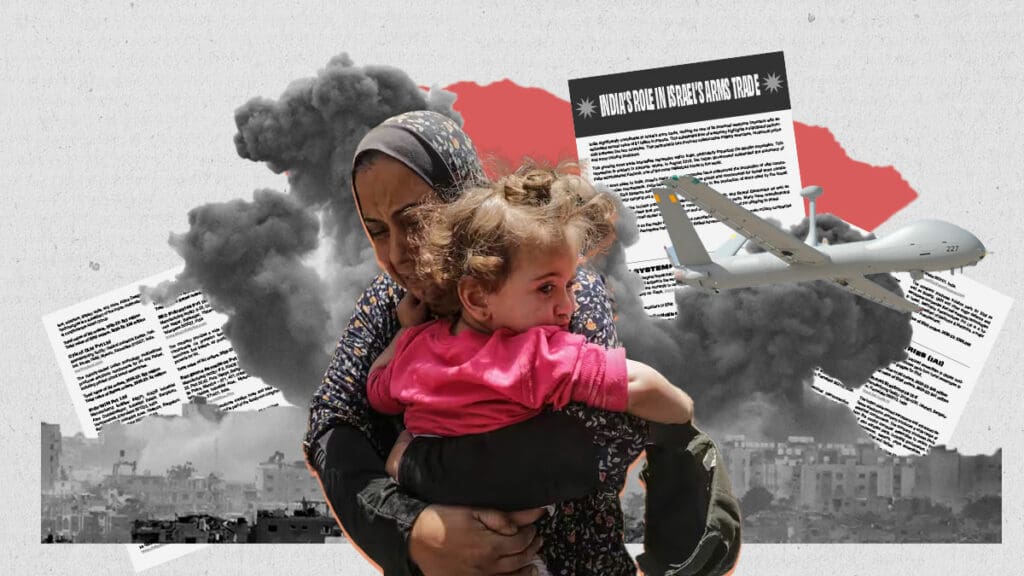
The Indian companies arming Israel’s military companies
The export of around 20 Hermes 900 drones to Israel by Adani-Elbit Advanced Systems was widely reported in February of this year. What has not been reported is that there are numerous other Indian companies, both big and small, that have been manufacturing and supplying aerospace components, electronic parts and explosives to Israel. In doing so, they may be enabling the war and genocide in Gaza.
(Tag: Rights)

“It’s our kuleana”
Two radio hosts and a TV producer working in Maui’s community media talk about their experience of the wildfires and why giving a voice to their community is more than just a job.
I heard about the Maui wildfires like everyone else: online and through social media. What got my attention was that these wildfires seemed never-ending, and they were happening in the United States.
As a local journalist from Aligarh, a town in northern India, I think that community media and local journalists are crucial to reporting and spreading awareness about events of such magnitude. Without them, we would not get the nuanced, personal stories; without them we could never understand the complex and interlinked lives of communities and how they face tragedies, like the Maui wildfires, and how they are overcome.
So when my editor proposed that I contact a community radio station in Maui to talk to them about what it was like to live through and report on the wildfires, I immediately said yes.
Continue reading on Radio Pacifica
(Tag: Resilience)

Despite Gaza War Crimes, India’s Ties With Key Israeli Military Firms Continue
On April 5, the United Nations Human Rights Council adopted a resolution urging an arms embargo on Israel and calling on countries to “cease the sale, transfer and diversion of arms, munitions and other military equipment to Israel.” India abstained from voting in favour of this resolution.
The resolution came just two weeks after the publication of “Anatomy of a Genocide,” a report by Francesca Albanese, the UN Special Rapporteur on Palestine, that gave the world evidentiary details on how Israel has committed genocide in Gaza.
This report reaffirms the January preliminary ruling of the International Court of Justice that found that “some of the acts and omissions” committed by Israel during its attacks on Gaza “appear to be capable of falling within the provisions of the [Genocide] Convention.”
(Tag: Rights)
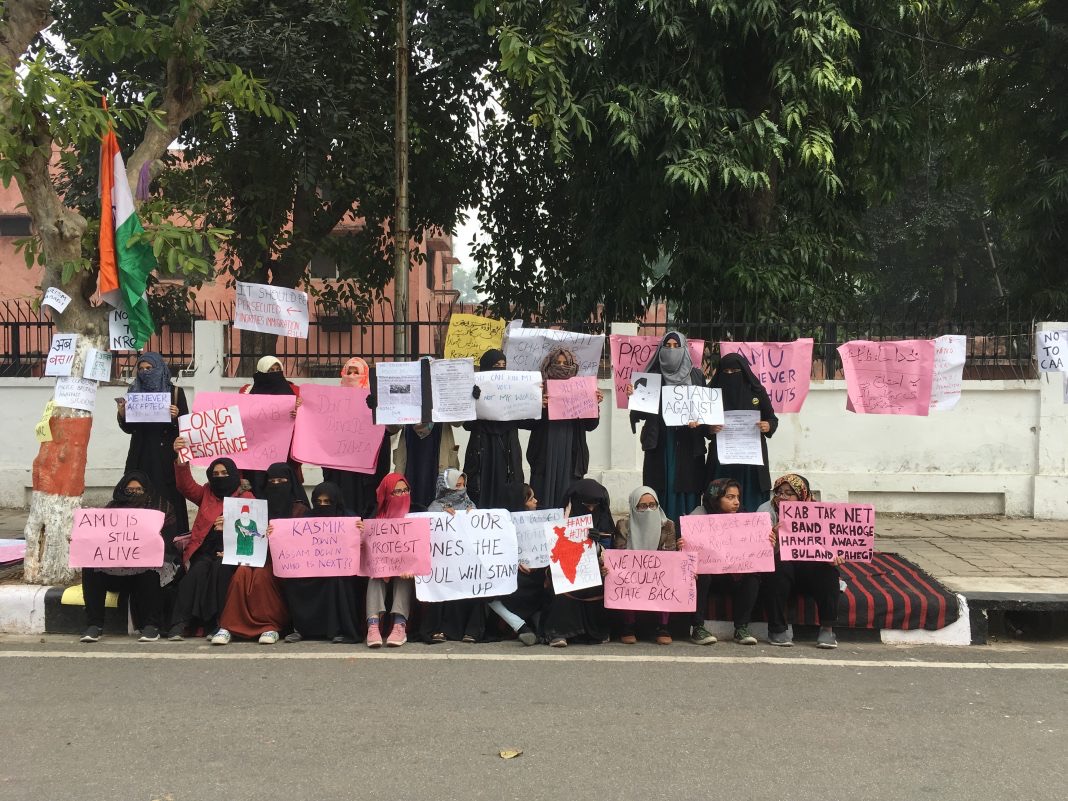
Week after protests, AMU keeps peaceful dissent alive
Aligarh: On the night of 15 December, Ayesha (20) and Tuba (21), two students of AMU sat in their homes listening to the sound of tear gas bombs coming from the university. Then students started calling them saying that they were being beaten up by the police. “Hamein itna hopeless mehsoos hua—We felt so hopeless,” says Tuba. They discussed among themselves and, after the violence that had marred Sunday night protests, they decided that a peaceful, silent protest would be the better strategy.
This is how I met them, sitting outside, below the steps of the Maulana Azad Library holding placards that read: “Silent protest #SUPPORTAMU #REJECTCAB,” “Protest is our right #REJECT CAB”, and “Tanashahi nahi chalegi—We do not accept dictatorship”.
Continue reading on Two Circles
(Tag: Resilience)
 Meher Ali